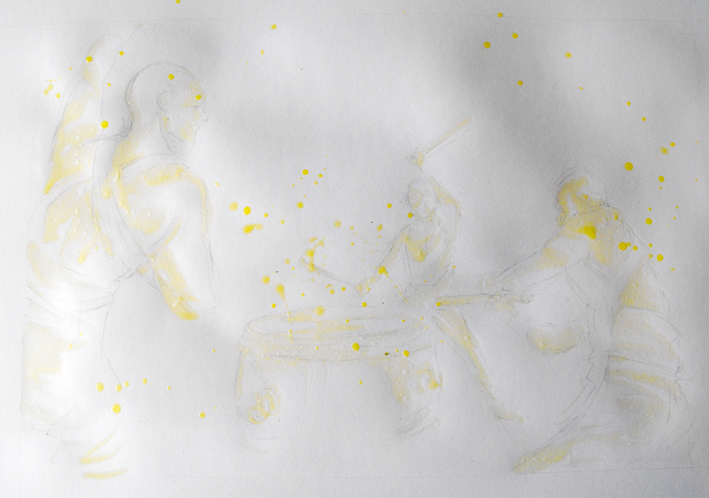


I was given the opportunity to sell some paintings. I wasn’t sure what to charge as it puts a bit more pressure on you when it’s commissioned work. But the brief was pretty open as long as it related to taiko music. So I came to an agreement if they let me experiment I won’t charge too much, especially as it was a non-prof organisation.
FOR STARTERS


I had no idea what I wanted to do but I had a few ideas and techniques running through my head. Ultimately it was governed by what reference material I had on offer. I used photos I found online of TaikOz from various photographers. If you would like to see more of their photos, please click on the photograph or their name. If these paintings were to reach a wider audience, ie reproduced professionally, I would have gotten permission to use them as reference material before I started. But it is unlikely they will be reproduced beyond this blog and my flickr site. Also I didn’t plan on my paintings being so true to the photos as there was more detail in them than I wanted.
Anyhoo, I planned to use watercolours and Indian ink, and I also wanted to capture the energy of taiko playing and the atmosphere it can create. It’s hard to replicate movement from a static photograph, so I had to rely on my personal experiences of taiko music to give it life.
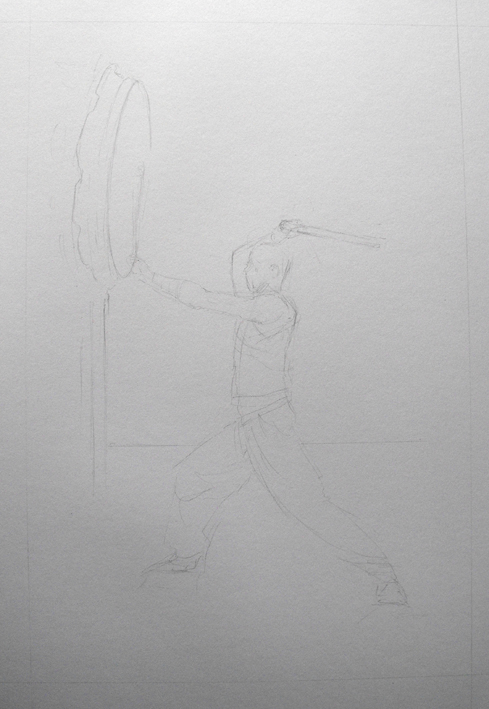
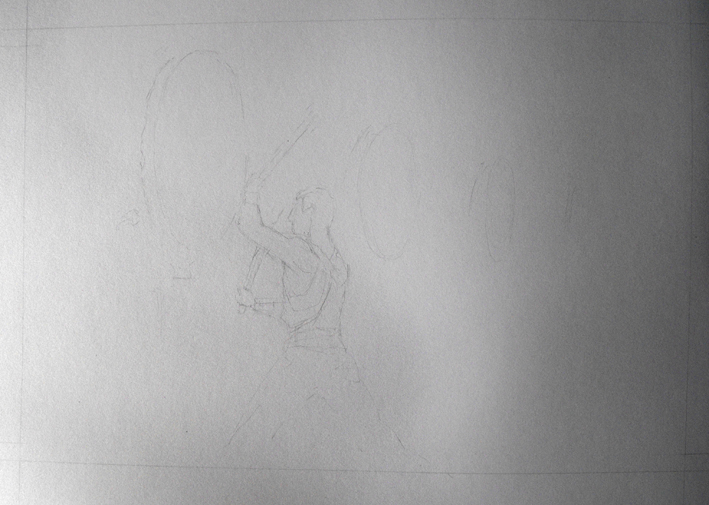
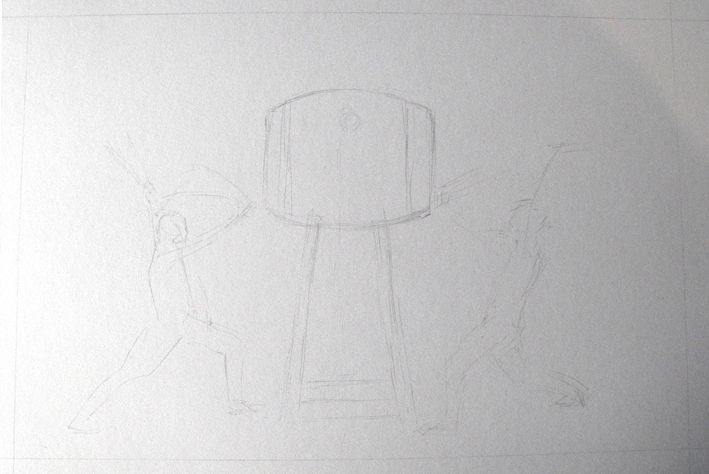
First step I lightly drew in the basic shapes. As mentioned, these paintings weren’t about detail but about movement and energy, so I only wanted enough detail to comprehend what was happening in the image.

Masking Fluid
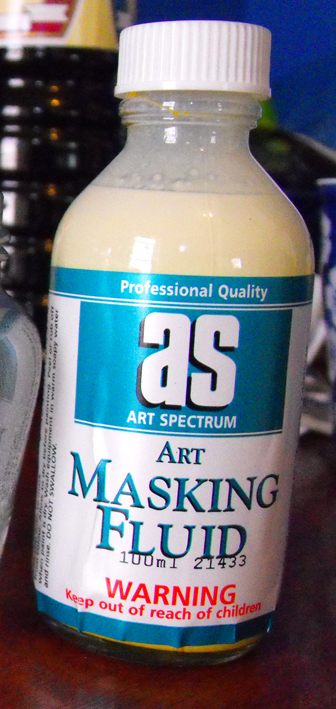
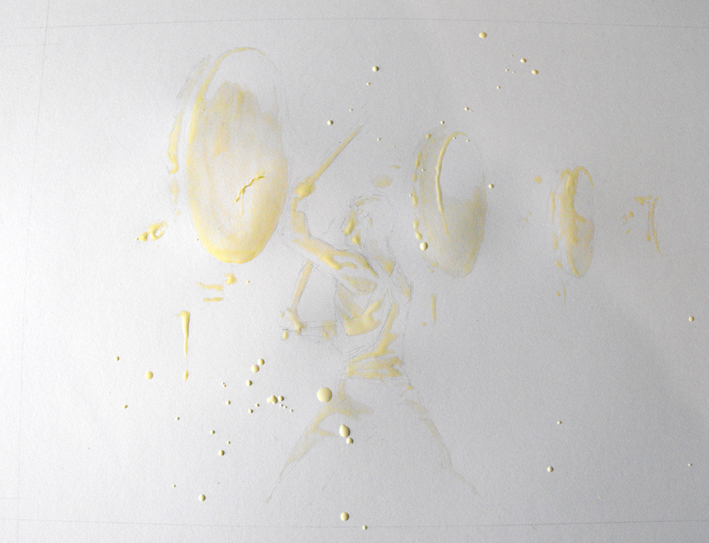
So I decided to use masking fluid. For those who have never used it before, it is a very wet liquid but when exposed to air will dry in several minutes and becomes waterproof. Masking fluid is usually used whenever there is a significant difference between the foreground and background colours, and you want the background to be applied seamlessly.

For example, if you wanted to paint a sunset – instead of painting around the trees and cliffs in the foreground leaving little brushstrokes around the edges, you liquid mask out the foreground shapes and paint the sunset in from top to bottom, left to right over the masked areas where it repels the paint. Then when the paint dries you gently rub off the masking fluid with your finger and it reveals your clean white paper.
But for me it was more about creating theatre in the paintings.
A few tips when using masking fluid
It’s something that is traditionally used only with watercolours. In the past I have managed to use it with gouache, but it is not something that works well with all art mediums. Also, depending on the quality of the paper, it can tear the paper when removing it (a bit like so-called “magic” tape). So it’s always good to test out the masking fluid on the paper you plan to use. Manufacturers also warn you not to leave masking fluid on the paper for too long as some versions can stain, especially the yellow version. Clear masking fluid is also available but it’s not always easy to see it when applying it.
To remove masking fluid when it dries, rub it off gently with your fingers (or thumb) – it’s the only way to remove masking fluid. I don’t think there is a tool for it at this stage, and I wouldn’t recommend using an eraser. Sometimes you can peel it off but be careful it doesn’t also start to peel the paper. Oh, and make sure your fingers are clean too!

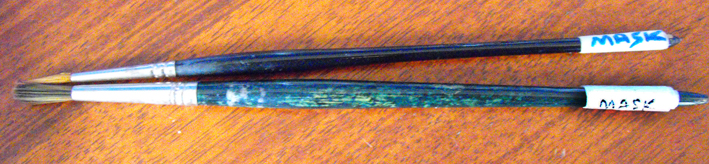
Also when applying it with a brush it can totally stuff up the bristles and as a result ruin a good brush. One brush I own the bristles have started to come out when I clean it, so don’t use an expensive brush. I have kept two brushes aside just for masking fluid application (I labelled the ends of the brush so I know) and try to have two different sizes.

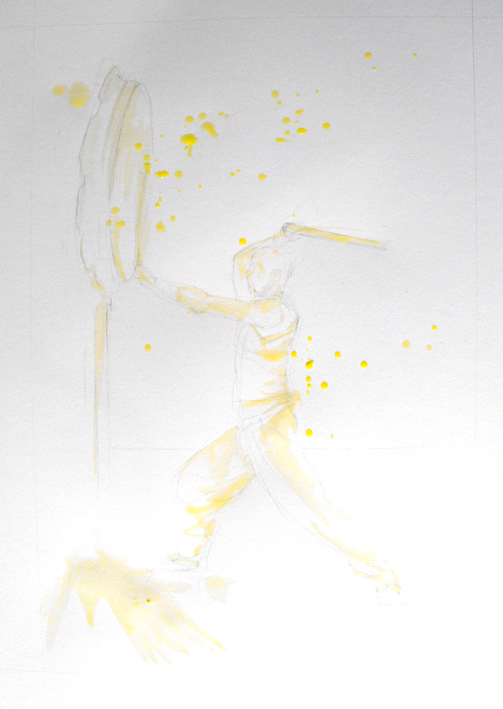
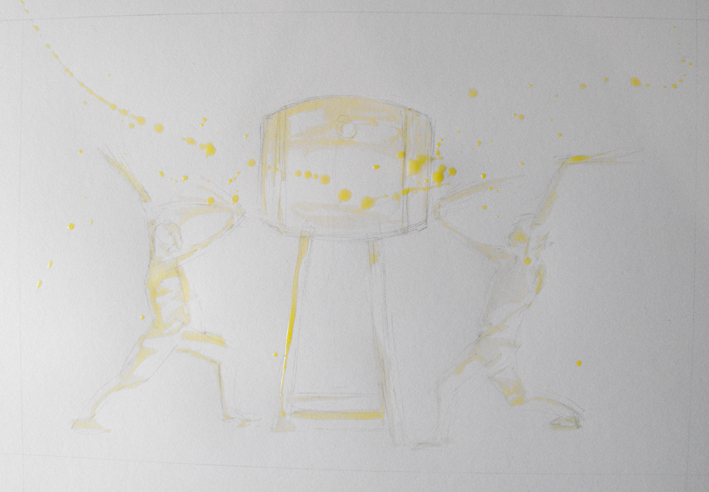
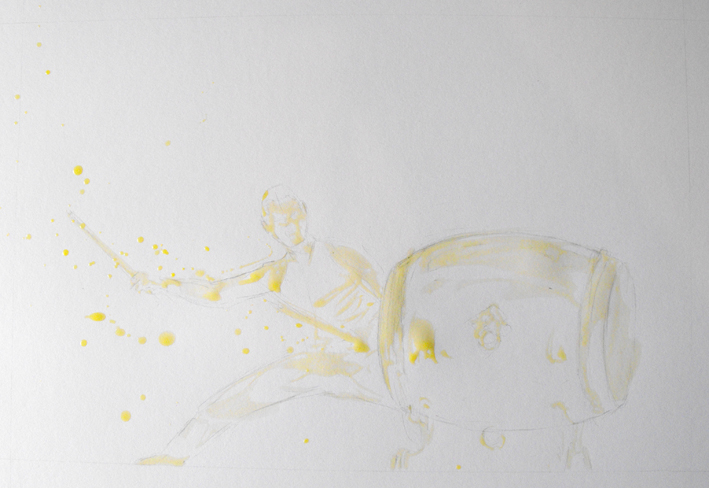
So I’ve applied the masking fluid to the areas that correspond to light reflections in the photographs, but I also splashed it around a bit too.
Applying Colour
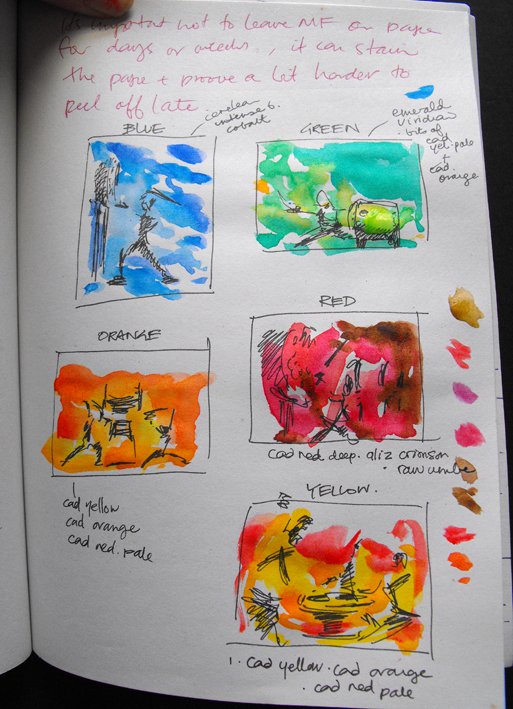
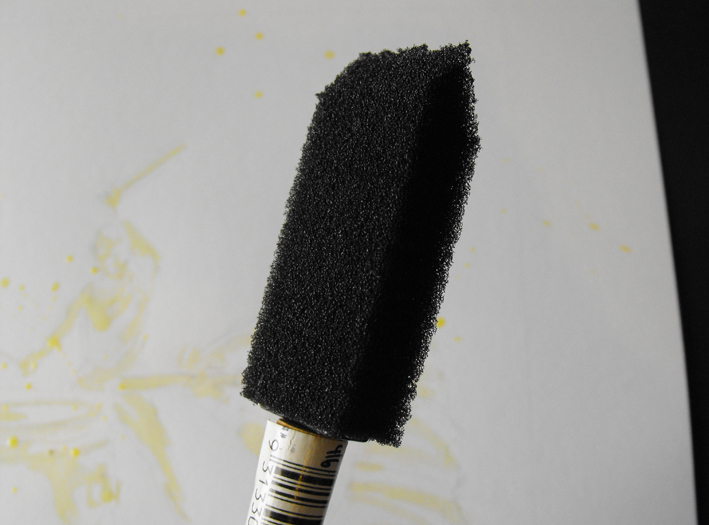
The only problem with this is that large amounts of water can make your paper buckle. If its important to you to keep your artwork as flat as possible, tape your paper on all sides to a thick piece of board and hopefully that will reduce the buckling in the end.
Mixing it up or going straight
I’m not sure if there are two schools on using paint, ie are there artists that like to mix up their own colours or do they prefer using them straight out of the tube? I used to like mixing colours but I found that if you weren’t happy with the results it is a lot of wasted paint. Or, if you did like the colour but needed more remembering how to remix the same colour again is a futile task. So now I prefer to use colours straight out of the tube. The only time I mix is mostly when I’m using my half pans and its an en plein air situation.
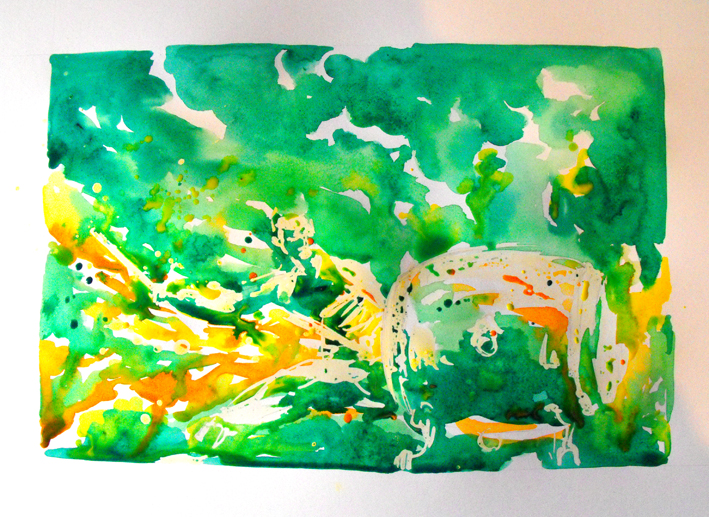
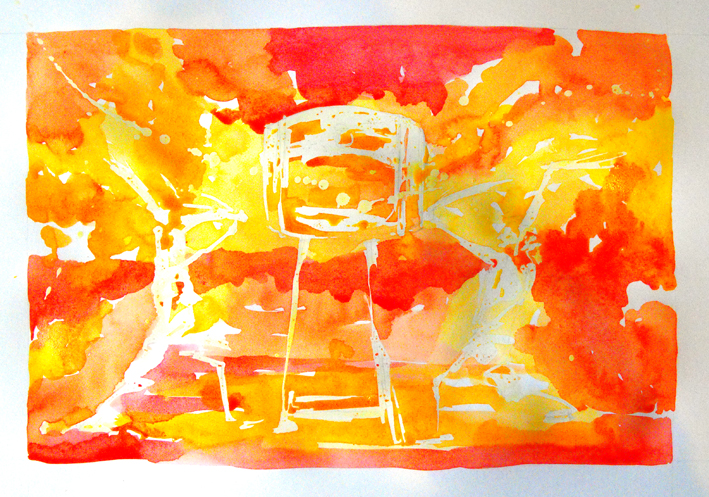
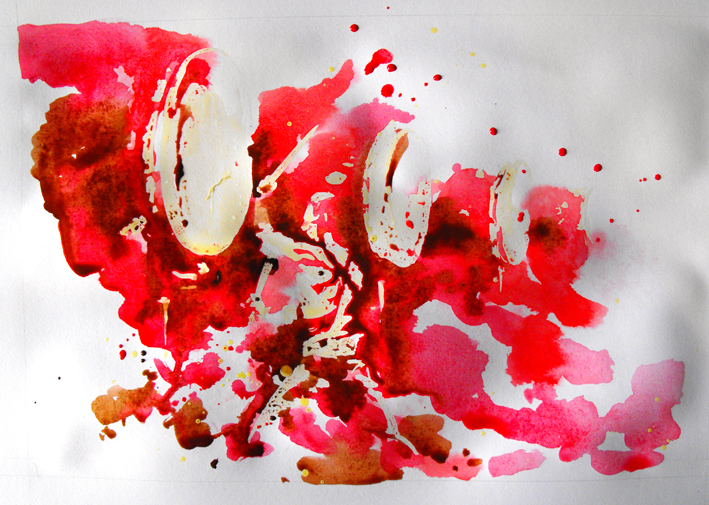
Although I wanted areas where the colours bled into each other, I also wanted to leave some areas “pure” so the colours weren’t muddy all over, like they were squeezed straight out of the tube. So it was hard to refrain from overworking it. The good thing about applying it quickly was that it also emphasised the movement and energy of taiko music.


Next step was applying the Indian ink. I decided to leave the masking fluid on for this stage as well, because I wanted to splash the ink around. My only concern was if I could peel off the masking fluid without making a mess, as indian ink is quite thick and can sit on the surface rather than be absorbed into the paper.

But it turned out okay. I did have a few issues in some areas – where the indian ink was very thick it tended to flake off when removing the mask. While others where it was thinly applied I accidentally smudged it. If I had smudged it with watercolours or even gouache you could probably clean it up with a lightly wet paintbrush and dab off the water with a tissue.

Then I added a few finishing touches like the bolts on the drum, facial features etc.

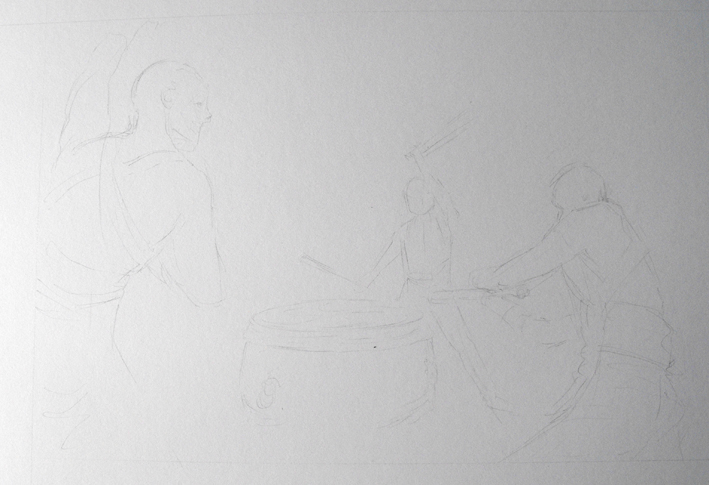
In the end it was a really good experiment. Probably not how I envisioned it but that was part of the excitement. I learnt I should tape my paper down before starting and that there is still a lot more I can do with masking fluid. Anyway, hope that was helpful. Below are the rest of the pieces and the separate stages it took to produce them.
Enjoy,
Meegan